Showing posts with label animal. Show all posts

Tuesday, September 28, 2010

Muslim Veg Americans

Islam's animal rights ambassadors

In the stark shadow of 9/11, many otherwise patriotic Americans seem to have forgotten that the U.S. Constitution unequivocally guarantees our right and freedom to practice whatever religion we desire. From the high-profile protests against the “Ground Zero Mosque”* to the knifing of a Muslim cabbie in New York City and the Florida pastor who coordinated (and then cancelled) a Koran bonfire at his church, it's become all too painfully clear that America is afflicted with an advanced case of Islamophobia. Obviously, some of our fellow citizens are mistakenly equating the vast majority of peaceful mainstream Muslims with the comparatively small number of enraged jihadists who indiscriminately kill in Allah's name—turning all Muslims into potential targets of hate crime.

Islam and animal rights share at least one unfortunate commonality: the more extreme elements in both camps top the FBI's list of the most dangerous domestic terrorism threats facing our nation. Of course, the feds specifically bestow this dubious distinction on those who use violent and/or destructive means to achieve their ends, but in some people's minds, anyone who follows the philosophy of either Islam or animal rights is guilty by association of conspiring with the enemy—even if we would (literally) never hurt a fly. In that way, veg Muslims may be doubly suspect in a society that's still reeling from the traumatic impact of a shocking mass-murder nine years after the fact.

As an American and a human being, it sickens me to see anyone persecuted for their spiritual beliefs—as much as seeing animals tortured in factory farms and other industrialized death camps. I therefore feel compelled to stand up for peaceful Muslims, but as a secular agnostic, I would not presume to speak for them. It is in this spirit of solidarity that I present my exclusive interview with blogger, financial analyst and vegetarian American Muslim Fareeda Ahmed.
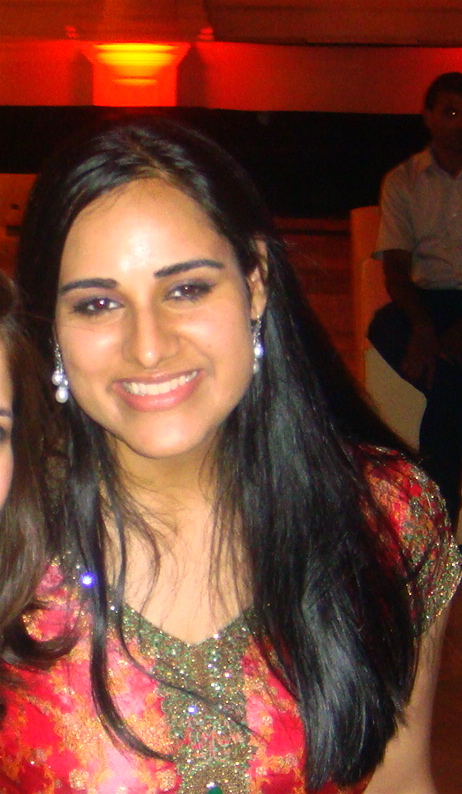
AR: Where are you from, and where did you grow up?

FA: I'm from New York. I was born in Manhattan and raised mostly in Westchester County, but I also lived in New York City for a number of years because I got my undergraduate degree at Columbia, and then worked at Morgan Stanley. My parents, on the other hand, were both born and raised in Pakistan, and came to the U.S. and got married after my father did his medical residency here. A lot of our family still lives in Pakistan, so I usually make a trip there every year. And I just moved to California last month to get my MBA at Stanford.

9/11 was obviously a pivotal point in American history and our relations with Muslims. Were you by any chance in New York City on September 11th, 2001?

No, at that time I was just 16—going on 17, as the song** goes—and a high school senior in Tarrytown, which is on the Hudson River about a half hour's train ride from the city. The entire school of about 400 students just so happened to be at an assembly that morning, and about 45 minutes into it, the headmaster interrupted to announce that two planes had been deliberately crashed into the Twin Towers. Our proximity to the World Trade Center meant that many of my classmates' parents and family members worked in or around there—my own cousin worked at the time for Morgan Stanley, sometimes in their WTC office—so the shock of that day was particularly personal for us.

How did you feel when you learned that the hijackers were Muslim?

I felt a strong dual connection to America and New York—my country and my home state. I was struck hard by the reality that they had both just been attacked so violently and viciously, while also realizing that this tragedy was going to dramatically change things for Muslims here in America and around the world. For me, and for many others I think, it marked the end of childhood. Speaking as a Muslim, it was the start of being defensive, because I've always been sort of an unwitting diplomat for Pakistan, which I consider a kind of second home. There, I don't have to explain myself for being Muslim, but here, I am constantly reminded that I follow a different religious faith from most Americans. And to complicate matters, Pakistan has a reputation as a hiding place for some of Al Qaeda's most wanted. Even though it's one of America's strongest allies in the War on Terror, and Pakistani soldiers and civilians die every day in the fight against Al Qaeda, the associations Americans have with Pakistan are often negative, unfortunately.

It seems like many Americans these days believe that Muslims, even those born and raised here, are somehow sympathetic to or supportive of the terrorists—like they're secretly celebrating when Americans are killed. Do you ever experience divided loyalties between your country and religion?

Not only do I not sympathize with people who commit acts of terror in the name of Islam, but it affects me directly because I lived in Manhattan, and worked in places like Times Square and the New York Stock Exchange that are among the top terrorist targets in the U.S. I worked at Morgan Stanley for four years, which had more office space in the WTC on 9/11 than any other company, and a lot of my co-workers had horrifying stories about surviving the attack. This past May, I took my father to see a play on the same day that a car bomb almost went off in Times Square. The theatre was only one block from where the bomb would have exploded, and the show ended just an hour before it was set to detonate, meaning my father and I could have been killed if the attack had been successfully carried out. So when I hear, for example, that Iran may be developing nuclear weapons, I don't sympathize with the Iranian government. Instead, as an American and a person who could potentially be on the receiving end of those missiles, I feel the same fear that anyone else would. But being Muslim in America, there's the added dimension of not being allowed to feel that way because we're so misunderstood.

Do you feel life has gotten more difficult for Muslim Americans in the wake of 9/11?

Faisal Shahzad, the would-be “Times Square Bomber,” really ruined the accepted profile of Muslim terrorists as being from some foreign country. He was an American citizen with a wife and kids and a good job, so now people think that any Muslim—even their friendly mild-mannered neighbors—could be part of a covert sleeper cell. Otherwise, there were ups and downs over the years since 2001, but overall, things appeared to be improving for us. Then last month everything suddenly came to a head. Right after 9/11, people seemed curious about and only slightly distrustful of Muslims, but now many people just seem to jump to conclusions without even trying to get the facts. If there is a silver lining here, though, it's that today's rage provides an opportunity for reconciliation, and I know that Americans are basically caring and open-hearted people, so they'll eventually summon their better angels. Inclusiveness and tolerance are core American and Islamic values, and Muslims come from the same religious lineage as Christians and Jews. Realizing our commonalities is ultimately what will unite us in the fight against global terrorism.

Since my blog is about animal issues, let's switch gears and address some. I understand that Islam includes a strong tradition of concern for animal welfare. Can you please speak to that?

Well, there are very specific instructions in the Koran about how Muslims are to treat animals used as resources, whether they are beasts of burden or slaughtered for food. Generally speaking, Muslims must take care to minimize the suffering of other species. An example would be Halal meat standards, which require that butchers follow sacred practices to ensure animals slaughtered for food don't suffer unnecessarily. Integral to Halal methods is that Islam expressly forbids the caging, beating, branding, and mutilation of animals***. Quotes from the Koran about animals leave very little gray area about how Muslims must universally respect other species as fellow sentient beings, and it was partly my interpretation of Islam that led me to become a vegetarian. I mean, when I really started to think about it, eating meat just seemed to conflict with my Muslim sensibilities, which include compassion for all forms of life and ecological stewardship.

Every vegetarian has a personal transformation story about why they chose not to eat animals, so what's yours?

I decided to go vegetarian about two and a half years ago after becoming aware of certain factory farming practices, and then reading up on vegetarianism in the context of Islam at a PETA website which I later wrote a blog post about. I was also informed and influenced by books such as Skinny Bitch and documentaries like Food, Inc. Meanwhile, as I learned more about factory farming, I realized how totally contrary this system is to the spirit of Islam. Bear in mind, Islam doesn't dictate that we Muslims can't eat meat—that's why Halal was invented—so I could have easily purchased Halal meat in the city. Yet I felt, as a Muslim and a human being, that vegetarianism was a more compassionate choice, and that my faith was telling me not to eat animals. There's a passage in the Koran that basically says “Whoever has done an atom's worth of good will see it, and whoever has done an atom's worth of evil will see it,” which means we are all accountable for our individual choices, including how we treat animals. And health-wise, within about three months of phasing meat out of my diet, I looked and felt noticeably better, and had lost a few pounds, so it definitely felt right physically, as well.

Since vegetarianism has had such a positive impact on your life, have you considered taking it to the next level by going vegan? I ask this question as someone who was vegetarian for six years before going vegan, and experienced exponential benefits after abstaining from all animal products.

Veganism makes complete sense to me in theory, and it's certainly the ideal I want to move towards in the future. But at the same time, I've found it so much harder to stop eating dairy than meat. I know that's not a very compelling argument for eating these foods, and that dairy cows and egg-laying chickens still suffer, even if they're not raised on factory farms. I look at both my own life and the history of Islam on a trajectory, with progress building on the foundations laid by previous actions. Consider where Islam came out of, for example. Pre-Islamic Mecca, now Saudi Arabia, during the 6th to 7th centuries was a barbaric place where baby girls were summarily killed at birth. Islam helped create a more civilized society that outlawed some of the harshest practices of that era, including unrestrained cruelty to animals. One of Islam's key philosophical tenets, in my understanding, is that we must work towards a better world step-by-step. It's a question of evolution, and vegetarianism is a more evolved diet than meat-eating. And as you follow that trajectory to its logical conclusion, for me personally, it ultimately leads towards veganism.

Do you have Muslim friends who are also veg?

A few, but not many. It's not like I've sought out other vegetarian Muslims by, say, looking for them on Facebook, though. The ones I do know don't cite Islam as their primary reason for not eating meat: they express the same concerns about ethics, environmentalism and health that other vegetarians do. Also, I have many South Asian vegetarian friends, but they're not necessarily Muslim: they're Hindu, Jain or Buddhist.

Regarding vegetarian advocacy, do you find that meat-eating Muslims are more receptive to the vegetarian message when it comes from a member of their own faith?

Yes, because when I tell them about how the vast difference between industrialized agriculture and Halal standards effectively makes factory farming a sacrilege in Islam, I'm speaking from personal experience. So, out of respect for our traditions, Muslims may be more open than other meat eaters to changing their dietary habits—at least in terms of rejecting factory farm cruelty, if not giving meat up altogether. But many people don't know that at least 98% of the meat produced in the U.S. comes from factory farms, so even when they learn that Islam strictly prohibits the consumption of flesh from tortured animals, they may continue turning a blind eye to avoid being inconvenienced.

What are some of the most popular vegan foods in Muslim culture?

There are about 1.5 billion Muslims in the world, and they're spread across the globe, so food traditions vary quite widely. But vegans can enjoy foods from many different Islamic countries. For example, my family comes from the Punjab region of Pakistan near the Indian border, which specializes in dishes made from rice, vegetables and rich curry sauces. Vegans can also find many delicious options from the Middle East, Malaysia, Indonesia, and Morocco. Personally, my favorite food is probably chhole, which is an Indian/Pakistani dish made with spiced chick peas served warm. As a vegetarian, I can confidently say that I'm definitely not missing meat at all—not even my mom's famous chicken!

* In explanation of my consciously-included quotation marks, fans of The Daily Show may recall a recent episode in which Emmy award-wining host Jon Stewart humorously observed that the “Ground Zero Mosque” would be neither a mosque (but rather a community center) nor located at Ground Zero (but rather two blocks away in a former Burlington Coat Factory outlet).

** From The Sound of Music soundtrack. Here's a YouTube video clip from the movie for those whose memories need jogging.

*** See The Animal Ethics Reader, p. 237.

Wednesday, May 26, 2010

Hub SoMa Launch Party – Thurs. May 27

New downtown SF coworking space a major activist resource

Would you like to be part of an exciting community that is committed to social change? Are you seeking support and resources for a project you're involved in, or an organization you'd like to form? Are you an activist looking to connect with entrepreneurs, artists, fundraisers, community leaders, and other professionals working on different progressive issues in a friendly office environment? 

If you answered “yes” to any or all of these questions, then the Hub is just what you need.

The Hub is a creative coworking space with 25 branches on five continents where
thousands of members connect and collaborate around the work they are doing in various
“change sectors,” from environmental sustainability and community development to
human rights and international investment. It is a place where people from diverse backgrounds meet to help each other reach their world-changing goals, whether it's starting a socially-conscious business or optimizing their non-profit's vast potential. As an actual workspace, the Hub offers all the amenities of an office—from “hot desks” and conference rooms to Wi-Fi and printers—as well as support services provided by mentors and consultants.

While a Berkeley Hub has been operating out of the David Brower Center for some time, a new 8,600-square-foot San Francisco location recently opened in the SF Chronicle Building at Mission and 5th Streets (one block from the Powell BART station) that's three times larger than the Berkeley Hub. They are holding their Launch Party on Thursday, May 27 from 7:00 to 10:00 p.m., and tickets are $10 each. This grand opening event gives animal activists a great opportunity to learn about the Hub, meet some of their members, and start taking advantage of this unique resource.

How can the Hub help animal activists? I recently spoke with Berkeley Hub “Host and longtime vegan Meredith Walters to find out.

AR: What is your job as a Hub “Host”?


MW: Basically, getting to know members personally and understanding what they're working on so I can connect them with people who can help. This includes everything from making individual introductions to encouraging people to attend our group events.

What are some of the Hub's specific support resources, and how can they benefit animal activists in particular?

We offer a range of programs that enable people from different social change sectors to share their skills, ideas and resources. For example, in the evenings and on weekends, we have panel discussions and speaker presentations on topics like branding, marketing, fundraising, and social networking, as well as other events such as reading groups and film screenings. All of these activities offer people opportunities to learn from and network with one another. I would encourage animal activists who become members to both attend events and organize their own, as well.

Our Peer-to-Peer mentoring groups are a great way for people who are starting projects to bounce ideas off each other, share resources and hold one other accountable to their own goals. We currently have groups in food justice, environmental sustainability and international development—all of which are directly related to animal issues. A lot of innovation happens when activists dialogue with people who have different perspectives, so working within a group allows animal advocates to both learn from and influence non-vegetarians, as well as test their messaging out on them to see whether it resonates.  

Hub members also have access to some very practical resources, like legal and marketing consults for social enterprise development, which is useful to anyone starting or managing a vegan business or animal protection non-profit. They can also use our private conference rooms for meetings, and rent our event space for larger groups.

But the most important resource the Hub offers its members is a shared workspace where they can meet and collaborate with each other. It's the hot-desking aspect that really gets people to connect with others, and where the most profound changes take place. Everyone at the Hub is doing something to find solutions to the world's problems, and that is at its core inspiring. Working for social change is challenging, so we are here to help people stay strong and avoid burnout by transforming their deepest values into action.

How many Hub members are vegans, vegetarians, or animal activists?


Right now, there are numerous vegan and vegetarian members who care about animal issues, but we don't have a large animal rights contingent, so I would love to see more animal activists get involved. In my experience, Hub members are more respectful toward vegans than most people, partly because they're generally open-minded, but also because they're already somewhat aware of the reasons people are vegan. And while not everyone is going to be vegan, Hub members all have their own passions and thrive on hearing about other people's passions, so there are many opportunities for mutual education.

It seems like many Hub Events involve eating. Are vegan options offered?

Food is a central gathering point at the Hub, and when we have potlucks, Brown Bag lunch discussions, Sexy Salad (every Wednesday, when everyone brings in a salad ingredient), and other shared meals, a lot of it is vegan. When I bring food, I always label it as vegan with a “help yourself” sign next to it. As a result, my diet comes up often in conversation, giving me the chance to tell people about the reasons I don't eat animals. And a few people have told me they're going vegan because of conversations we've had: they get excited about it and want to connect with a vegan who can guide them through the transition.

To learn more about the SoMa Hub:

- Attend the Launch Celebration on Thursday, May 27 from 7:00 to 10:00 p.m.

- Come to an open house between 9:00 and 11:00 a.m., Monday through Friday

- Arrange a tour during business hours (9:00 a.m. to 6:00 p.m., Monday through Friday) by emailing tim.nichols@the-hub.net or calling 415-624-5881

- Check out the Bay Area Hub events calendar 

- Join the Hub (membership starts at just $25 a month)

Tuesday, December 22, 2009

Minestrone Is Murder?

Maybe so — but carnivores still kill many more plants than vegans do

Day after day, meat eaters try to discredit ethical veganism with an astonishing array of pseudo-philosophical protests, but the recurring assertion that “Plants have feelings, too” is particularly vexing — mainly because it’s so transparently insincere. Think about it: Why are meat eaters so remarkably resistant to recognizing the horrific suffering of “food” animals, yet simultaneously eager to anthropomorphize faceless fruits and vegetables that utterly lack the brains, central nervous systems, and sense organs (like eyes and ears) generally associated with sentience? When carnivores insist that plants’ feelings matter, it seems to me that they disingenuously want to appear genuinely concerned about hurting innocent herbs, when in fact the sneaky subtext peeking out from underneath the edge of this compassionate facade is a self-serving accusation that we vegans are as guilty of murder as the most unrepentant flesh-obsessed gourmand.

The latest example of this perennially weed-like phenomenon sprouted up yesterday in Natalie Angier’s New York Times article “Sorry, Vegans: Brussels Sprouts Like to Live, Too” — a title which insinuates, baselessly, that plants’ faculty for feeling somehow negates the moral authenticity at the core of animal rights. Now, please understand, I am by no means criticizing Angier for promoting the hypothesis that all living organisms are imbued with some form of consciousness: actually, I find the eminent behavioral botanist’s quotation touting plants’ capacity for “sensory modalities and abilities we normally think of as only being in animals” quite compelling. What I do object to, strenuously, is that any carnivore (much less a mainstream science journalist) would have the unmitigated chutzpah to charge that it’s hypocritical for us vegans to shout “meat is murder” while allegedly committing mass herbicide — especially because meat eaters kill so many more plants than we do in the course of daily dining!

Need proof? Then check out these stunning statistics:

• To yield a single pound of edible meat, a chicken must consume about 2 pounds of grain*, a pig must consume about 4 pounds, and a cow must consume 10 to 16 pounds. So, every time someone eats meat, they kill 2 to 16 times as many plants than they would by eating vegan.

• Slaughtering approximately 65 billion animals worldwide for meat each year requires that one-third of humanity’s grain harvest be fed to livestock. This calculation accounts for 80% of U.S. corn crops and about 99% of U.S.-produced soy meal, but not the vast fields of grass and other naturally-growing plants upon which free-range cows, sheep and goats graze.

• According to the United Nations Food and Agriculture Organization, livestock production occupies 70% of all the land used for agricultural purposes, and nearly one-third of the Earth’s entire landmass. This boundless terrain was once unspoiled habitat for billions of native plants and animals who were either displaced or eradicated — some to the point of extinction. The beef industry, for instance, is the driving force behind the destruction of Brazil’s Amazon rainforest, one of the planet’s most diversity-dense regions, with nearly 80% of deforested land being used for ranching.

Strictly speaking, it’s impossible for us to physically survive without consuming other living entities — just as billions of microbial creatures subsist on the proteins in our bodies. But contrary to the misleading myths of popular belief, veganism isn’t about achieving perfection, purity or sainthood (or, for that matter, smugly proving our superiority or political correctness). Rather, the point is to consciously make pragmatic lifestyle choices that significantly reduce the amount of pain, agony and death suffered by others as a result of our privileged existence, and persuade people to do the same in the name of non-violence.

So, the next time some smart-ass carnivore tries to excuse their lethal fauna-filled diet by feigning sympathy for faultless flora, just look them right in the eye and tell them straight out: If you really, truly care about the plight of exploited plant beings, then go vegan now!


* I originally cited a website claiming (inaccurately, it seems) that the grain-to-meat conversion ratio for chickens is 6:1. Tip of the hat to Erik Marcus for pointing out the error.

Saturday, October 17, 2009

Go Figure! The Mathematics of Dietary Death

Computing the cost of plant vs. flesh food production in animals’ lives

Anyone who’s been vegan for any length of time has heard the dizzying array of specious arguments for why people are supposedly meant to eat meat, dairy and eggs. These reasons range from the nutritional (“we need animal protein to live”) to the Biblical (“God gave humanity dominion over all the Earth’s creatures”) to the ethical. Yep, that’s right: some omnivores have the cajones to claim that vegans are responsible for killing more animals than flesh eaters!

Oregon State University professor of animal science Steven Davis, for one, contends that people who eat beef from cattle fed on grazing pasture spare more animals’ lives than vegans because of all the death supposedly caused by harvesting crops. While Davis’ research has appeared in such prestigious periodicals as TIME magazine and the Journal of Agricultural and Environmental Ethics, apparently no one bothered to peer-review or fact-check his methodology before publication. That is, a new analysis of the professor’s claim reveals that (surprise, surprise!) his numbers don’t quite add up.

Artist and graphic designer Mark Middleton recently calculated the true impact of food production on two categories of animals: domestic species specifically slaughtered for human consumption, and wild species killed as a consequence of agricultural harvesting. What’s more, he translated his findings into an easy-to-read graph* that enables comparison of how different diets (i.e., plant vs. flesh foods) impact animals’ lives — both by the numbers and as an interactive (filterable) visual representation of these otherwise abstract values:


Extrapolating from this diagram, we find that:

• Eating chicken flesh takes about 100 times the number of animals’ lives as eating the equivalent caloric content of vegetables.

• Subsisting on only grains for an entire year would likely cost fewer than two animals (e.g., field mice) their lives.

• Contrary to Davis’ central assertion, the number of wild animals who die as a result of beef production is much greater than occurs in the harvesting of all plant food varieties combined.

Middleton arrived at his revised conclusion by incorporating into his formula some criticisms of Davis’ work by researchers Gaverick Matheny and Andy Larney which, upon even cursory consideration, seem so basic that it’s amazing they even had to bring them up. I mean, it doesn’t take a mathematician to know that we can feed more people per acre by using land to raise crops rather than cattle, as Matheny opined, or to understand Larner’s contention that counting animals killed by predators (in addition to, say, chemical pesticides and mechanical threshers) skews the end results. So Middleton’s new presentation begs an obvious question: why did Davis’ claims go so completely unchallenged by the mainstream media and the scientific establishment when he made them?

Opinion makers’ unquestioning acceptance and promotion of Professor Davis’ flawed theory says more about meat eaters’ desperate psychological need to justify their violent destructiveness than anything else: apparently, people want to continue eating animal flesh so badly that they will even unconsciously create and cite conspicuously inaccurate data to make the case that omnivores are ethically superior to vegans. Once again, we vegans have the truth on our side, but there remain some lingering doubts about its persuasive value, because people basically believe what they want to believe. If history is any guide, many omnivores will continue to invent and propagate ways of salving their guilt by convincing themselves that meat is not murder but mercy — no matter how much incontrovertible evidence we vegans present to the contrary.

Related AnimalRightings:

- My 8-page VegNews magazine feature article “The Road to Vegetopia: (Re)Imagining the Future of Food” (illustrated by Mark Middleton)

- My blog post about Middleton’s “Virtual Battery Cage”

* For interested techies, Middleton built this interactive graphic in Adobe Flash using a data visualization library called Flare. Click here for a full explanation of the analysis and mathematical proofs.

Sunday, August 23, 2009

Help Farmworkers, Help Farm Animals

New Yorkers: Urge your Senators to vote YES on S.2247

“The African is incapable of self-care and sinks into lunacy under the burden of freedom. It is a mercy to him to give him the guardianship and protection from mental death.”
– Former U.S. Vice President John C. Calhoun regarding slaves (circa 1844)

“This notion that they need to rest is completely futile. They don’t like to rest. They want to work seven days.”
– Hudson Valley Foie Gras Co-Owner Izzy Yanay regarding farmworkers (circa 2009)

It is our moral obligation as citizens of a democracy to ensure that every worker in America has the same basic rights as every other, regardless of what job they do. Yet even now in the 21st century, as the result of a 71-year-old compromise with segregationist Dixiecrats during the New Deal era, those who toil in New York State’s agricultural fields and factory farms are still denied the fundamental benefits that the rest of us take for granted. And I’m talking here about some of the most basic employment expectations, like getting at least one day of rest a week, disability insurance, collective bargaining options, and overtime pay for working extra hours.

Though California passed the first laws rectifying this disparity in the mid-1970s and most other states have since followed suit, New York still suffers the unrepentant repercussions of blatantly racist government policies more than seven decades after their codification. To redress this longstanding injustice, a broad coalition of labor advocates, student activists, religious groups, and state legislators are now unifying behind the Farmworkers Fair Labor Practices Act (A.1867/ S.2247), and after a long struggle are finally within reach of victory. I’m glad that some animal advocates have already cast their lot with the workers, but hope that the animal protection movement as a whole will join them in this fight for equal treatment under the law, because:

1) We vegans eat the New York-grown apples, grapes, potatoes, corn, cabbage, and other plant foods that farmworkers help raise and harvest, and our purchases may well be subsidizing an exploitive system that denies tens of thousands of people the guaranteed protections that we enjoy.

2) If he were alive today, trailblazing farm unionizer and fellow vegan Cesar Chávez would be leading the charge for these workers’ civil rights.

3) Of the approximately 80,000 farmworkers employed by New York State’s multi-billion agriculture industry, more than half are documented migrant workers and illegal immigrants of Latino descent who are compelled to endure terrible working conditions under threat of losing their livelihoods and being forced out of the U.S.

4) There is no ethical justification for economically discriminating against people based on ethnicity, class or nationality.

5) Achieving parity for those working in factory farms will also dramatically reduce incidences of animal abuse.

Workers are Animals, Too

There are probably some animal advocates out there who would argue that siding with people who harm animals for a living is speciesist because it prioritizes farm workers’ interests over animals’ well-being. While I acknowledge the kernel of philosophical legitimacy at the core of this claim, I would counter by pragmatically pointing out that ignoring the farmworkers’ plight helps neither them nor the animals, but rather bolsters the power of those who abuse both — the factory farm owners. Just as Nobel Prize-winning author and holocaust survivor Elie Wiesel said, “We must take sides. Neutrality helps the oppressor, never the victim. Silence encourages the tormentor, never the tormented.” In this case, the only way we can take the animals’ side is by siding with the workers against the industry that oppresses them.

Please bear with me while I explain. These laborers typically work 60 to 70 hour weeks, and yet most still live below the poverty line. Many are allowed to reside in the U.S. only temporarily via the H-2A guest worker program, which strictly prohibits them during that limited period from working for anyone besides the employer who originally hired them. Such restrictions leave these legal workers completely at farm owners’ mercy, and reluctant to petition for even the meager protections they are entitled to because reprisals could very well entail not only job loss but summary deportation.

Meanwhile, the health and safety risks most factory farm hands undergo on a daily basis are far beyond what American workers in virtually every other industry are ever exposed to. Being kicked by cows and bitten by pigs are the least of these hazards: peer-reviewed field studies indicate that an inordinate number of U.S. farmworkers are afflicted with acute and chronic respiratory diseases from constantly inhaling air that is rife with toxic gases emanating from the tons of feces and urine expelled by farm animals at a typical concentrated livestock facility. Farmworkers also suffer disproportionately from symptoms such as diarrhea, nausea, abdominal pain, vomiting, and fever, but show up to work every day without fail because their employers are not required to provide them with paid sick leave, and taking a day off without pay could mean losing one’s job altogether.

On Down the Food Chain: Victims Become Victimizers

As far as how this affects farm animals, think about it: such vulnerable employees are unlikely to report labor law violations, so they certainly aren’t going to speak up when someone breaks the state’s minimal animal welfare statutes. In fact, surveys show most farmworkers are never even informed that such laws exist. What’s most disturbing and destructive about this situation is that the frustrations caused by working excruciatingly long hours for low wages in stressful and often dangerous conditions greatly increase the probability that farmworkers will commit egregious acts of animal cruelty.

First, it’s essential to understand that the factory farm environment is intrinsically antithetical to ethical norms. Consider, for example, what workers go through every day at Hudson Valley Foie Gras in Upstate New York. Inside giant warehouses, tens of thousands of ducks are confined in body-sized stalls and force-fed excessive amounts of corn-mash for a period of 30 days before they are killed and their bloated and diseased livers harvested for a high-priced gourmet delicacy. Once the compulsory gorging cycle begins, the birds will only accept food from the same person at each meal, so workers (who must individually feed hundreds of animals each day) spend about 12 hours a day (interspersed throughout each 24-hour period), seven days a week for four full weeks shoving pneumatic tubes down ducks’ esophagi and pumping them full of food. On the 31st day, some workers get a day off, then come back to work after a 24-hour leave to start the cycle all over again.

Second, if this sounds sick to you, remember: the agriculture industry seriously maintains that these conditions are perfectly normal, healthy and “humane” for both the workers and animals. To reiterate, the description above is not an aberration but the legal and accepted norm for American foie gras production, and similarly horrific conditions are common at other factory farms. Yet, as we animal activists know all too well from viddying ultraviolent sinnys of undercover investigations showing workers kicking chickens like footballs and lethally smashing piglets’ heads against the floor, superfluously abusive incidents are also all too common behind the bloody walls of these licensed hellholes.


The New York State Assembly has already passed their version of the Farmworkers Fair Labor Practices Act (A.1867), and 28 of the 32 votes we need for a majority in the Senate have been secured. It’s therefore looking pretty good, but influential agribusiness lobbies are actively pressuring lawmakers to defeat this measure, so we need to make one final push to get this bill passed. With the Senate due back from their summer recess in September, you can make a difference now by checking whether your State Senator is already a co-sponsor of S.2247. Depending on their status, contact their office and take one of the following actions:

- If they oppose: Tell your Senator that, as a constituent and a voter, you strongly believe in equal treatment under the law for farmworkers, and urge them to reconsider their position on this important issue. You may wish to mention that polls show New Yorkers overwhelmingly support expanded rights for farmworkers.

- If they are already on board: Let your Senator know that you greatly appreciate their support for this bill, and urge them to 1) persuade their colleagues who have not yet signed on that it is time for New York to stop denying farmworkers the fundamental rights they have earned and deserve, and 2) work to put this bill on the legislative agenda so the full Senate can finally vote on it.